
Bridging the Digital Divide: Building an Inclusive Future for the Maritime Sector
Digitisation and automation in the marine and offshore industry is no longer a future trend. It is a present operating reality.
Across shipping, port services and offshore support, the pace of change is accelerating. Yet, while some of the larger industry players have invested heavily in systems, integration and digital operating models, many small and medium-sized organisations remain heavily dependent on legacy management systems, email-based workflows and spreadsheets that were never designed to support today’s digitised demand signals.
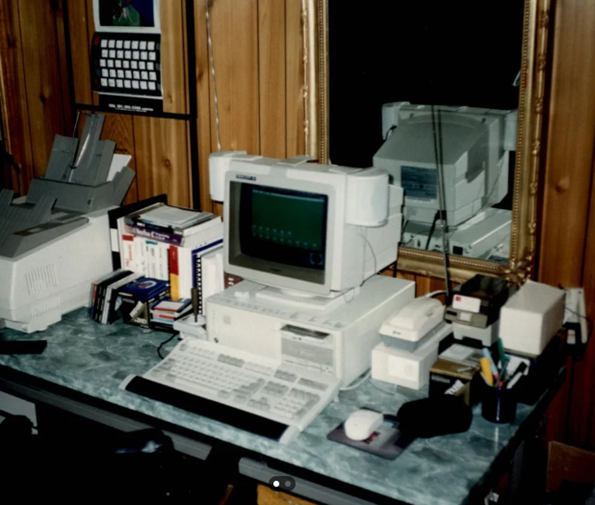
Back in the Day – In the ‘90s this was what most ship support operations looked like.
For some ship owners, operators, charterers, port agents, ship management companies and marine insurers, this gap is becoming harder to ignore. The issue is not simply one of modernisation for its own sake. It is about whether existing ways of working remain robust enough for an increasingly connected, data-rich and commercially demanding maritime environment.
That is why digital preparedness becomes increasingly relevant.
A Sector Under Pressure to Modernise
The maritime sector has always evolved in response to commercial pressure, regulatory change and technology development. What is different today is the pace at which this evolution is taking place and, in particular, the speed at which shipboard connected operational technologies and Internet of Things (IoT) systems, perhaps best known as Maritime IoT, are driving change across the sector.
Vessels, cargo movements, equipment, workforce and port operations are generating more data than ever before, while Maritime IoT-enabled devices, remote monitoring tools and connected systems are changing how information is gathered and used. Decision-making is no longer shaped only by post-event reporting, or the strictures of limited coastal internet connectivity. Increasingly, organisations are expected to respond to data and demand signals from vessels operating over the horizon in open ocean where connectively was not routinely available previously.
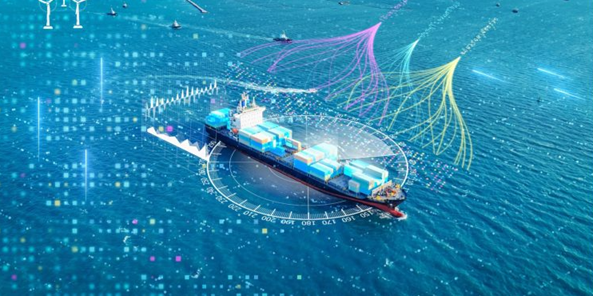
Maritime operators find themselves trying to adapt to a much more digitally-enabled environment.
For many smaller operations the pace and cost of configuring their internal systems to respond to these digital changes has been too high. As a result they continue to manage critical commercial and operational processes through disconnected spreadsheets, manual reconciliations and fragmented management workflows. Reporting often depends on the knowledge of a few individuals rather than on structured, resilient processes and whilst data exists, it is not recognised as a commodity, distrusted, seldom integrated or actionable and, as a consequence, it is under-valued.
Maritime Digital Poverty
Across the SME community in shipping there is, in effect, a form of digital poverty, in that smaller operators fail to fully interact with the digital and automated systems. It is not merely a lack of internet access, but a multi-dimensional issue covering the lack of appropriate devices, sufficient connectivity, and the necessary skills or confidence to navigate the digital world, especially in an era of "digital-by-default" services.
This creates risk in several forms: operational inefficiency, weak visibility, poor-quality reporting, duplication of effort and slower decision-making. It also makes change harder because when a business relies on patchwork systems and workarounds, introducing digital tools can easily add complexity rather than remove it.
The Challenge is Not Just Technical
One of the most common mistakes in discussions around maritime digitisation and automation is to treat the issue as purely technological. In reality, digital progress is as much about operating models, governance and process design as it is about software.
A company may purchase a new platform, improve connectivity or commission a reporting dashboard, but unless the underlying workflows, accountabilities and information requirements are clear, the result is often disappointing.
More systems do not automatically create better control.
This is especially true for small and medium-sized organisations. Many do not need large-scale transformation programmes, instead, they need a proportionate, practical understanding of what digital readiness should look like for their business, where the most significant gaps lie, and where introducing digital systems will produce the strongest operational return.
That means asking sensible questions. Are current management systems capable of supporting future reporting and assurance needs? Where is the organisation most exposed to legacy systems dependency? Which processes are overly manual or reliant on informal knowledge transfer? What management information is actually needed in order to make better decisions? Which improvements are urgent and which can wait?
If answered honestly, these types of question sit at the heart of improving competitiveness, resilience and service quality in our increasingly digital industry.
Why Preparedness Matters Now
The maritime market is becoming more integrated, more transparent and more demanding. Customers, partners, insurers and regulators increasingly expect timely information, stronger process control and more reliable operational insight. Internally, businesses need better visibility over performance, cost, risk and delivery.
Preparedness matters because digitisation is not a switch that can be turned on all at once. It is a staged journey and organisations that understand their current position are far better placed to prioritise investment, manage risk and avoid expensive missteps.
Without enterprise-wide, coordinated preparation digital initiatives can become fragmented, with divisions within the same company adopting different and incompatible reporting systems or operational software. In a short amount of time, an organisation can end up with multiple sources of “the truth”, unclear ownership and no coherent digital roadmap.
By contrast, a good approach creates structure, establishes a baseline, clarifies priorities and helps a company to separate genuine requirements from passing trends.
A Practical Route for Maritime Businesses
This is the thinking behind The IWH Group’s Blue Future initiative, which is recently been launched to complement the companies other services. It has been developed for marine and offshore organisations that need help navigating the implications of rapid digitisation.
The IWH Group is already known for its work across Marine & Offshore, supported by service lines including Project & Programme Delivery and Performance Improvement. Framed in that context, Blue Future is less about technology evangelism and more about practical business readiness.
IWH’s starting point is an assessment of the current state: systems, workflows, management information, reporting arrangements, dependencies and integration points. The purpose is not to generate abstract recommendations, but to understand how prepared the business really is for the modern and future maritime operating environment.
From there, the focus shifts to defining what “good” looks like for that specific organisation. A port agent, for example, will not need the same digital model as a ship management company or marine insurer. Preparedness has to be grounded in the realities of each business: its size, service delivery model, clients, internal capabilities and commercial pressures.
Only then does roadmap development become meaningful. Quick wins can be identified, medium-term priorities sequenced and major risks made visible before resources are committed. The roadmap would include process redesign, better management reporting, reduced spreadsheet dependency, clearer data ownership or implementation support for selected systems.
What matters is that the sequence is practical and proportionate and tailored to the individual business.
Implementation Remains the Hardest Part
In many organisations, the biggest obstacle is not recognising the need for change. It is delivering it successfully.
Maritime businesses operate in environments where service continuity matters, margins are tight and internal capacity is limited. There is rarely the luxury of pausing operations while transformation takes place and that is why structured implementation support is critical.
The value of a preparedness approach is that it links assessment to delivery. It allows change to be mobilised in manageable phases, aligned with operational realities rather than imposed on an organisation, its workforce, supply chain and customers. It also improves the chances that the investment in digital systems will result in measurable performance improvement, rather than another layer of administration.
This is where programme delivery discipline and performance improvement capability become essential. Change has to be governed, tracked and embedded. New tools must improve control, not simply generate more data.
Management information must become more useful, not just more plentiful.
A Growing Market Need
The opportunity in this area is not difficult to understand. Market signals across the maritime sector point to growing interest in digitisation, structured knowledge-sharing and practical collaboration around adoption. Smaller and mid-sized firms, in particular, are looking for support that is informed by sector realities rather than generic digital theory.
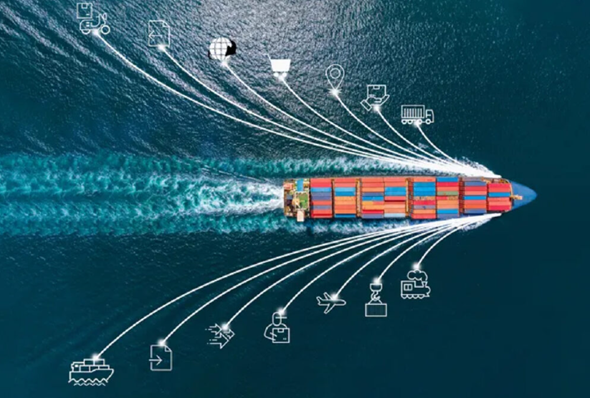
The industry is already far more digitally connected than it was even 5 years ago.
That creates space for offerings that combine maritime understanding with delivery capability. Businesses do not just need advisers to tell them that digitisation is happening. They need partners who can help them interpret what that means operationally, decide where to focus and implement change sensibly.
From Legacy Dependence to Digital Confidence
The maritime sector is becoming more connected, more data-enabled and more demanding. For organisations still reliant on legacy systems and manual workarounds, the question is no longer whether change is coming. It is whether they are ready for it.
IWH’s Blue Future offers a practical answer. It helps maritime businesses understand their current state, define a realistic target, prioritise action and move forward with greater confidence.
For many maritime SMEs, that may prove to be the difference between surviving into the next decade or not.